
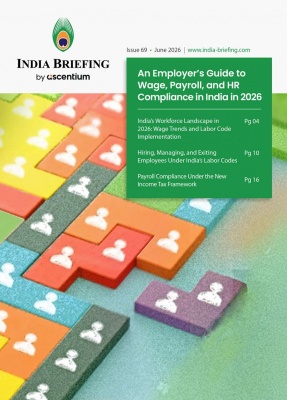
India’s employment and payroll compliance environment is changing rapidly in 2026. With the implementation of India’s four labor codes, revised wage definitions, state-level minimum wage updates, greater scrutiny of contractor and third-party staffing arrangements, and the transition to the Income-tax Act, 2025, employers must reassess how they hire, compensate, manage, and terminate employees in India.
This issue of India Briefing Magazine provides a practical guide for foreign investors, HR leaders, finance teams, payroll managers, and corporate decision-makers operating in India. It explains how India’s labor codes and the new direct tax law affects wage structuring, statutory contributions, workforce planning, employment contracts, working hours, flexible work arrangements, payroll TDS, employee tax declarations, perquisite reporting, and HRMS system updates.
The publication is designed to help businesses understand the compliance impact of India’s changing labor and tax framework and identify the action points needed to reduce risk, control employment costs, and build a scalable workforce strategy in India.
Key topics covered include India’s workforce trends in 2026, minimum wage revisions across major business hubs, implementation of the Code on Wages, Industrial Relations Code, Code on Social Security, and Occupational Safety, Health and Working Conditions Code, as well as employer obligations under the new Income-tax Act, 2025 and Income-tax Rules, 2026.
This guide is especially relevant for companies setting up or expanding operations in India, global capability centers, manufacturers, service-sector employers, foreign-invested businesses, and organizations reviewing payroll, HR, tax, and labor compliance systems for 2026–27.
Contents:
- India’s Workforce Landscape in 2026: Wage Trends and Labor Code Implementation
- Hiring, Managing, and Exiting Employees Under India’s Labor Codes
- Payroll Compliance Under the New Income Tax Framework